
Movie Taglines: 40 Examples and How to Write One
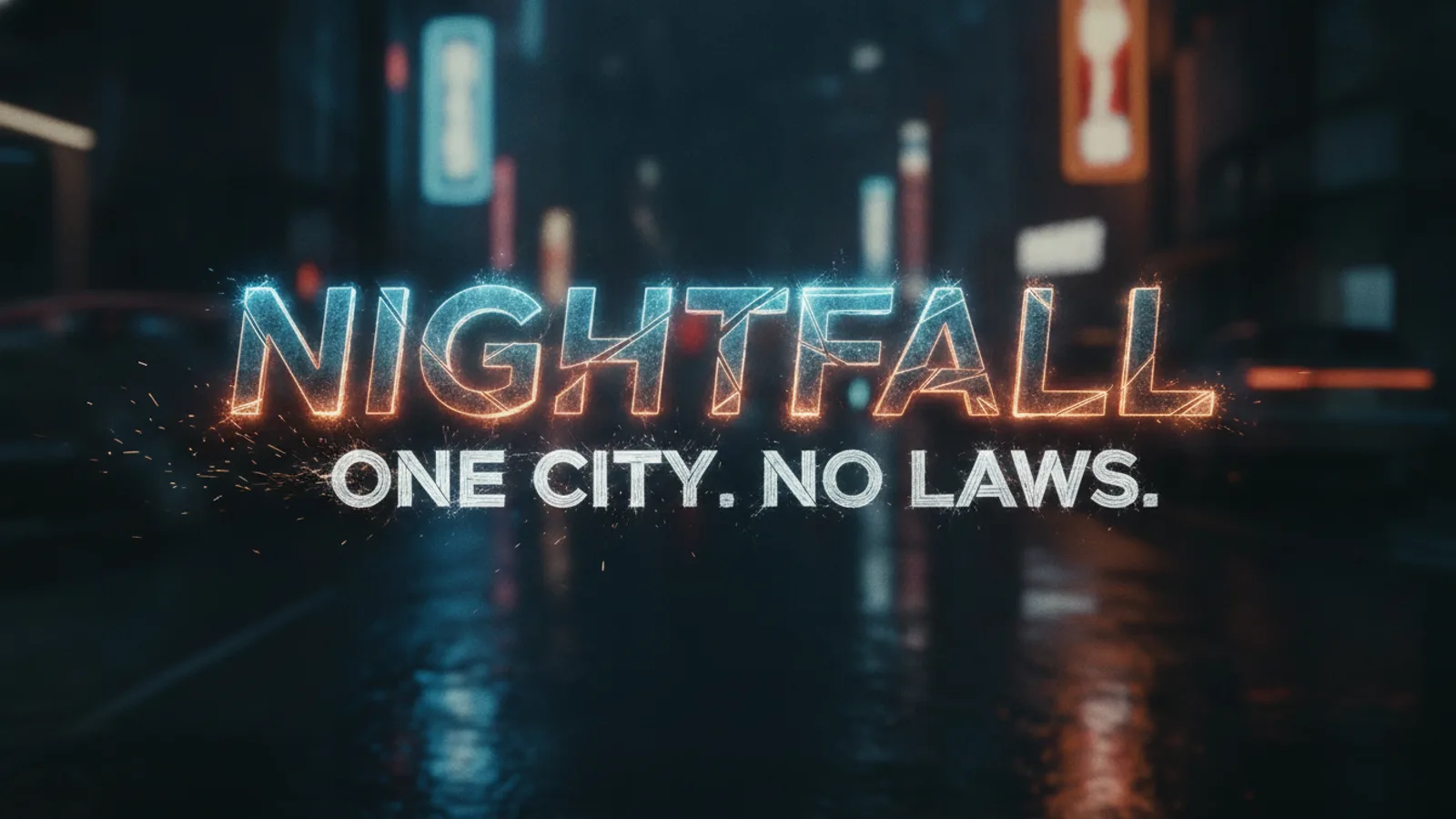
A movie tagline is the short line on the poster, usually 3 to 8 words, that sells the feeling of a film instead of its plot. The best ones work like a hook: they hint at a conflict, leave one question open and match the genre's mood, so "Some promises outlive the people who make them" tells you more about a film than a paragraph of story.
Below you will find what separates a tagline from a logline, eight formulas that produce good taglines fast, 40 original examples by genre (written for invented films, so you can borrow the shapes freely), and how to put your tagline on the end card of a trailer with an AI movie trailer generator.
Tagline vs logline: what is the difference?
The two get mixed up because both are one line long. They do different jobs.
- A logline explains. "A night-shift nurse discovers that one of her patients has been dead for three days, and he is asking to go home." It names the hero, the problem and the stakes. Writers use it to pitch and to plan.
- A tagline teases. "Visiting hours are over." It names nothing, explains nothing, and makes you want to know.
A quick test: if your line would help someone summarise the story, it is a logline. If it would look good in white letters on a black poster, it is a tagline. Write the logline first (our logline examples show the formula), then squeeze the feeling of it into a few words.
How to write a tagline in five steps
- Find the one feeling. Fear, longing, triumph, dread, mischief. A tagline can carry only one.
- Find the central question. Will she get out? Who sent the letter? What happens when the lie comes out? The tagline should make the viewer ask it without spelling it out.
- Write ten versions fast. Do not judge them yet. Use the formulas below as starting points.
- Cut every word you can. Articles, adjectives, the hero's name. "She must find out the truth before it is too late" becomes "The truth has a deadline."
- Read it next to the title. The tagline and the title are seen together on the poster and back to back in the trailer. They should not repeat each other: if the film is called The Last Post, a tagline about letters is redundant; one about time is not.
8 tagline formulas that work
Most memorable taglines fall into a handful of shapes. Pick the one that fits your genre and fill it in.
- The warning. Tell the viewer not to do something. "Do not answer the second knock."
- The rule. State a rule of the film's world. "Every wish costs a memory."
- The contradiction. Put two things together that should not fit. "The safest town in the country has the most graves."
- The countdown. Add time pressure. "Seven days to forget her."
- The triplet. Three short beats, often one word each. "One heist. One night. No second chances."
- The twist on a phrase. Bend something familiar. "Home is where the hurt is."
- The question. Ask the viewer directly. "What would you trade for one more summer?"
- The understatement. Say much less than the situation deserves; it works for comedy and for dread alike. "Grandma has a few rules."
40 movie tagline examples by genre
Every tagline here was written for an invented film. None of them is from a real movie, so use the shapes, mix them, and make them yours.
Action and epic
- One city. No laws. One cop who forgot both.
- The fall of an empire starts with one door left open.
- Outgunned. Outnumbered. Not out of time.
- To save the future, she has to steal it first.
- Victory always sends a bill.
- Twelve floors. Forty guards. One elevator.
- The last pilot doesn't fly home.
- Some wars are won by the ones who stay.
Horror
- Do not answer the second knock.
- You can hear it breathing in the walls.
- The house remembers every guest.
- It only moves when you blink.
- Visiting hours are over.
- Grandma has a few rules.
Mystery and thriller
- The truth was buried for a reason.
- Everyone at the table has an alibi. One of them is lying.
- She was told never to open it.
- The photo was taken tomorrow.
- Seven suspects. Six lies.
- The town keeps its secrets. And its strangers.
Romance
- The wrong person at the perfect time.
- Every summer ends. Not every love does.
- Two strangers. One umbrella. A very long rain.
- She planned everything except him.
- Some letters arrive twenty years late.
- Falling was the easy part.
Drama
- What we lose, we sometimes find again.
- Some promises outlive the people who make them.
- Three sisters. One house. No forgiveness.
- He came home a hero. Nobody asked what it cost.
- The hardest goodbye is the one you rehearse.
Comedy
- The worst wedding planner for the best day ever.
- A family reunion where everyone has a secret. Including the dog.
- He adopted a llama by accident. The llama did not.
- Her plan was perfect. Her family was not.
- The bachelor party went fine. Then they found the boat.
Sci-fi and fantasy
- A new world awaits. If you survive the journey.
- Magic is real. And it has been outlawed.
- Every wish costs a memory.
- The last dragon holds the key to the first war.
Pro tip: genres borrow from each other. A comedy tagline in the shape of a horror warning ("Do not let Dad near the grill") is funnier than a joke, because the form sets up a threat and the content deflates it.
Common tagline mistakes
- Summarising the plot. "A detective must solve a murder before the killer strikes again" is a weak logline, not a tagline.
- Generic superlatives. "The greatest adventure ever told" could sit on any poster. Specific beats big.
- The wrong mood. A pun on a horror poster tells the audience to expect a parody. If that is not the film, cut it.
- Spoilers. The tagline is seen before the film. "She was dead all along" is a confession, not a hook.
- Borrowing a famous one. A real film's tagline belongs to its marketing. Write your own; the formulas above make it easy.
Put your tagline on a trailer
A tagline earns its keep on screen. In a trailer it is the line that lands right before the title, when the music is at its peak. On Cinely you can make that trailer two ways from the AI movie trailer generator page.
From an idea. Choose From an idea and write the logline (20 to 600 characters), then the title (up to 60 characters). In Tagline (optional) type your best line, up to 80 characters, or leave it empty: Cinely then writes a tagline of at most 10 words from your title, logline and mood. Pick the length, Teaser (15 s, 2 clips), Trailer (30 s, 4 clips) or Long (60 s, 6 clips), and one of seven moods (Epic, Action, Horror, Romance, Comedy, Drama, Mystery), each with its own music bed.
From my movie. If you already made a film on Cinely, choose From my movie to cut a trailer from its own scenes (it needs at least three finished scenes). The tagline, title and release cards are the same.
After the last shot the cards come in a fixed order: the tagline card, then the title card, then the release line (Coming soon, Now streaming, None, or your own up to 24 characters such as "This summer"), then an optional parody rating card like "Rated A for Awesome". On 30- and 60-second trailers there are also short intertitles between the shots, at most four words each ("One city. One secret."); that is where the triplet and countdown formulas shine. For the voice that reads the narrator lines, see our movie trailer voice guide.
The preview is free and shows every clip, narrator line and card, your tagline included. Credits are charged only when you approve: a cut from your film is a flat 30 credits, and a trailer from an idea is 30 credits a clip in Standard (60, 120 or 180 credits for the three lengths) or 60 a clip in Cinematic, which needs Premium. New accounts get welcome credits and daily check-in credits; free downloads carry a small "Made with Cinely" badge that Premium removes.
Cinely makes original stories only: a title, logline or tagline that names an existing film, franchise, character or real person is blocked before any credit is charged.
A tagline checklist before you publish
- Can someone read it in two seconds?
- Does it carry one feeling, and is it the film's feeling?
- Does it leave a question open?
- Does it avoid repeating the title?
- Does it give nothing away about the ending?
- Did you see it on the end card, next to the title, at least once?
Where to go next
If you need the story line behind the tagline first, start with the logline examples. For the full beat-by-beat structure of a trailer, read how to make a movie trailer, and if you are deciding between a 15-second first look and a full trailer, see teaser vs trailer. For a trailer of a film that does not exist yet, starring you and your friends, try the fake movie trailer guide.
Written your tagline? Open the AI movie trailer generator, paste it into the tagline card and watch it land on the free preview. When the trailer makes people ask for the whole film, make it with the AI movie maker, or browse genres like mystery and horror in the catalog for inspiration.
- What is a movie tagline?
- A movie tagline is a short marketing line, usually 3 to 10 words, printed on the poster and shown on a card near the end of the trailer. It does not explain the plot; it sells the feeling of the film and leaves a question in the viewer's head.
- What is the difference between a tagline and a logline?
- A logline explains the story in one sentence: who the hero is, what they want and what stands in the way. A tagline teases it in a few words. The logline is for pitching and writing; the tagline is for the poster and the trailer. Our guide to logline examples covers the first one.
- How long should a movie tagline be?
- Short enough to read in two seconds: most good taglines are 3 to 8 words. On Cinely's trailer maker the tagline field takes up to 80 characters, and when Cinely writes one for you it keeps it to 10 words at most.
- Can AI write a tagline for my movie?
- Yes. In Cinely's AI movie trailer generator, leave "Tagline (optional)" empty and Cinely writes one from your title, logline and mood. You see it on the free preview with every other card before any credits are charged, and you can still type your own instead.
- Where does the tagline go in a trailer?
- Near the end. In a Cinely trailer the order after the last shot is fixed: the tagline card, then the title card, then the release line such as "Coming soon", then an optional parody rating card.
Written with AI assistance and edited by the Cinely Team.