
Grimm Fairy Tales for Kids: 15 Stories to Tell
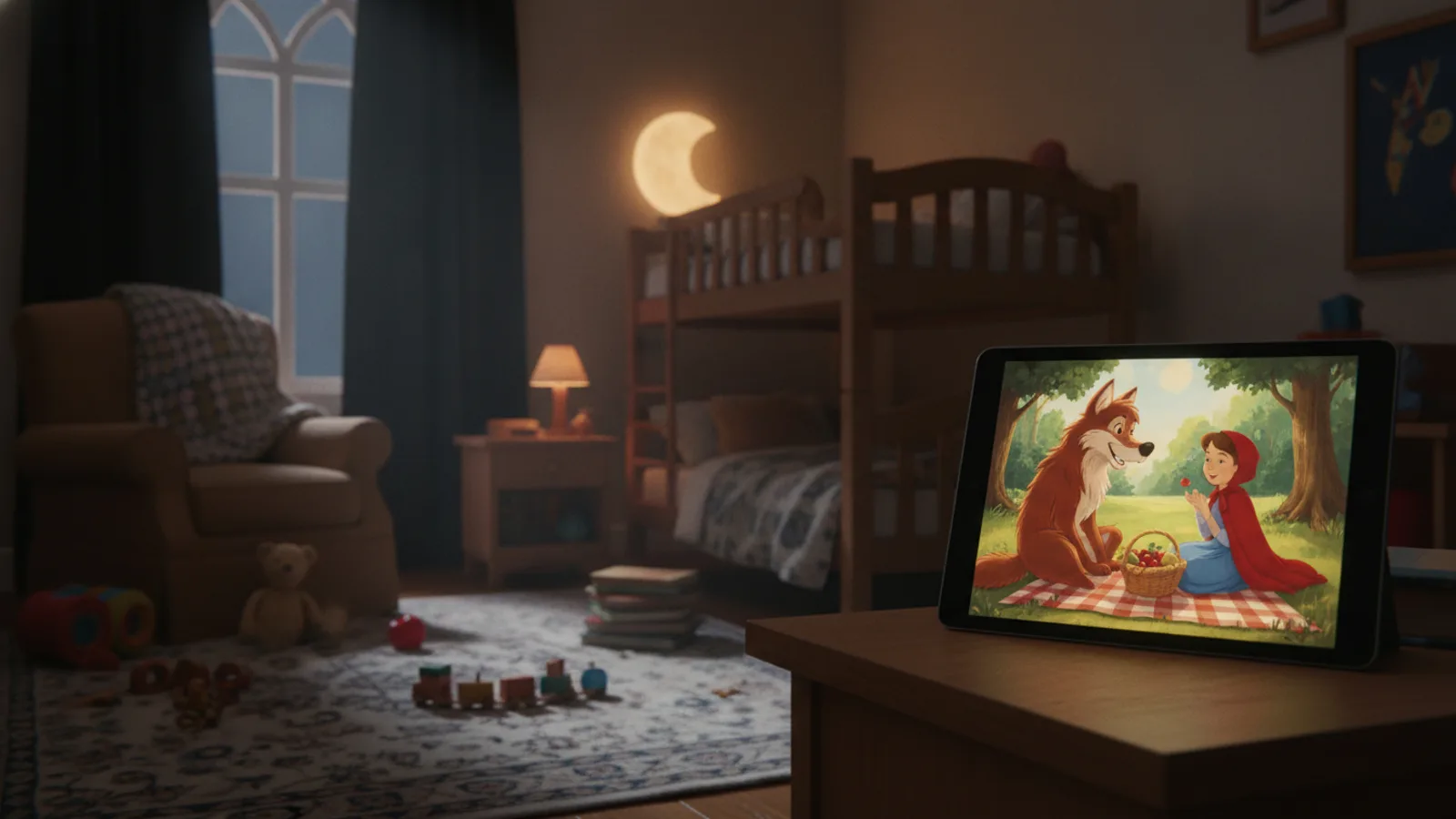
Grimm fairy tales are the folk stories the brothers Jacob and Wilhelm Grimm collected in Germany and first published in 1812, about 200 tales in all, from Little Red Riding Hood to Rumpelstiltskin. Below are 15 of the best fairy tale stories for kids from the Grimms and from Hans Christian Andersen, what each one teaches, which ones suit little ones, and how to turn any of them into a short narrated video with Cinely's AI story video maker.
Why these old tales still work
A fairy tale is built like a good bedtime story: one hero, one wish or one trouble, a mistake, a turning point and an ending that answers it. Children remember the pattern. The magic (a talking frog, a pot that cooks by itself) keeps them listening, and the lesson arrives without a lecture.
Many of the Grimms' original endings are harsh, though. Villains are punished in ways a parent may not want to read aloud to a four-year-old. That is why the list below marks which tales are gentle enough for little ones and which are better for children aged six and up.
10 Grimm fairy tales for kids
Gentle enough for ages 3 to 5:
- Sweet Porridge. A poor girl is given a little pot that cooks porridge when told "Cook, little pot, cook", and stops when told to stop. When her mother forgets the words, porridge fills the whole town. Lesson: listen carefully, and use magic wisely.
- The Elves and the Shoemaker. A poor shoemaker leaves leather on his bench at night and finds perfect shoes in the morning, made by two little elves. He and his wife thank them with tiny clothes. Lesson: kindness should be repaid.
- The Bremen Town Musicians. A donkey, a dog, a cat and a rooster, all too old to be wanted, set off together to become musicians and end up with a home of their own. Lesson: together, the overlooked are strong.
- The Star Money. A poor little girl gives away her bread, her cap and even her clothes to others in need, and the stars fall from the sky as silver coins. Lesson: generosity comes back.
- The Golden Goose. The youngest son shares his simple lunch with a little grey man and is given a golden goose; everyone who touches it sticks to it, and the parade makes a sad princess laugh. Lesson: a kind heart beats a clever one.
Better for ages 6 to 10 (or told gently):
- Hansel and Gretel. Two children lost in the forest find a house made of bread and cake, and a witch who lives in it. Gretel's quick thinking saves them both. Lesson: keep your head, look after each other.
- Little Red Riding Hood (the Grimms call her Little Red Cap). A girl strays from the path on the way to her grandmother's house and meets a wolf. Lesson: do not talk to strangers or wander from the path.
- The Frog Prince. A princess promises a frog her friendship if he fetches her golden ball, then tries to break her promise. Lesson: a promise is a promise.
- Rumpelstiltskin. A little man spins straw into gold for a miller's daughter, at a terrible price, unless she can guess his name. Lesson: be careful what you promise, and never boast.
- The Fisherman and His Wife. A fisherman frees a magic flounder, and his wife wishes for a bigger house, then a castle, then more, until everything is gone. Lesson: greed loses what it has.
Other well-known Grimm tales include Snow White, Cinderella (in the Grimm version a hazel tree and birds help her, not a fairy godmother), Rapunzel, Sleeping Beauty (Little Briar Rose), The Wolf and the Seven Young Kids and The Brave Little Tailor.
5 Hans Christian Andersen fairy tales
Andersen, a Danish writer, published his first fairy tales in 1835. Unlike the Grimms he wrote his own stories, and they are often more bittersweet.
- The Ugly Duckling. A clumsy grey bird, teased by everyone, grows up to be a swan. Lesson: you will find where you belong.
- The Emperor's New Clothes. Two swindlers sell an emperor "invisible" clothes, and only a child dares to say he is wearing nothing. Lesson: say what is true.
- The Princess and the Pea. A real princess is found because she can feel a single pea under twenty mattresses. A short, funny tale for little ones.
- Thumbelina. A girl no bigger than a thumb is carried off by a toad, escapes, and finally finds a home among the flowers. Lesson: stay true to yourself.
- The Steadfast Tin Soldier. A one-legged toy soldier stays brave through a long adventure for the paper dancer he loves. Bittersweet, best for older children.
The Little Mermaid and The Snow Queen are Andersen's too. His Little Mermaid ends very differently from the films, which is worth knowing before you read it aloud.
How to turn a fairy tale into a story video
You do not need to write the plot. In the AI story video maker, the name of the tale is enough:
- Type the tale in the story field (up to 400 characters): "The Elves and the Shoemaker", or "Hansel and Gretel, told gently". When you name a classic, Cinely's writer tells that tale faithfully, in its public-domain form, with no character, name or design from any film studio's version.
- Choose who it is for. Little ones (3–5) means sentences of four to eight words and nothing frightening: a villain is only grumpy or silly, and is forgiven. Kids (6–10) allows a little suspense that always ends well, with danger seen from a safe distance. Everyone keeps a storybook tone that may be bittersweet but is never gory.
- Choose how it is told. Classic fable (the default) is a "Once upon a time" storyteller with a moral that lands like a proverb; Bedtime is soft and slow and winds down; Playful is bright and funny.
- Pick the storyteller's voice: Auto, Warm woman, Gentle man, Grandmother or Grandfather, one of 30 more voices, or your own recorded voice. One voice reads the whole tale. The AI storyteller guide explains the voices in detail.
- Add the moral if you want one (up to 120 characters). Leave it empty and the storyteller draws one from the tale. It is said last and shown on the final clip.
- Set the length: 30, 60, 90, 120 or 180 seconds. A Grimm tale fits well in 60 or 90 seconds.
- Press Preview story. You read the title, every line of narration and the moral for free, and pay only when you approve.
Whatever the audience, the safety rules always apply: no blood, no weapons used on anyone, no cruelty shown, and every character ends up kind or forgivable. So the harshest Grimm endings get a gentler turn without you having to edit them.
You can also put your child into the tale. Type a hero name and the storyteller calls the hero by it; add a clear photo of their face and they keep that face in every scene. Only a parent or guardian may upload a child's photo, and it is used for that video only. Your child as the youngest son with the golden goose is a very different story from the one in the book.
What it costs
Every video is made of 8-second clips at 30 credits each in Standard quality:
| Length | Clips | Credits (Standard) |
|---|---|---|
| 30 s | 4 | 120 |
| 60 s | 8 | 240 |
| 90 s | 12 | 360 |
| 2 min | 15 | 450 |
| 3 min | 23 | 690 |
Cinematic quality costs 60 credits a clip and needs Premium. New accounts get welcome credits and daily check-in credits, enough to try a short tale. Free downloads carry a small "Made with Cinely" badge; Premium removes it. Videos are landscape by default for a TV or tablet, portrait if you want to share them as Shorts, with read-along captions in any of 17 languages.
More story ideas
If your child likes these, the same tool tells Aesop's fables and the Panchatantra: see 12 short moral stories to turn into videos. For a calm story at night, read the AI bedtime story guide, and to turn a story you wrote yourself into a video, see story to video AI.
Pick one tale from the list, open the AI story video maker, and read the preview tonight before you decide.
- Which Grimm fairy tales are best for young children?
- Gentle ones with a clear, kind lesson: Sweet Porridge, The Elves and the Shoemaker, The Bremen Town Musicians, The Star Money and The Golden Goose. Tales with a wolf or a witch, such as Little Red Riding Hood or Hansel and Gretel, are better for school-age children, or told in a softened version.
- Are the original Grimm fairy tales too dark for kids?
- Some are. Several of the old endings punish the villain harshly. When you make a fairy tale video in Cinely, the tale is told in its public-domain form but the safety rules always apply: no blood, no weapons used on anyone, no cruelty shown, and every character ends up kind or forgivable. For children aged 3 to 5 nothing is frightening at all.
- Can I turn a Grimm fairy tale into a video with AI?
- Yes. In Cinely's AI story video maker, type the name of the tale, choose who it is for and how it is told, and press Preview story. Cinely writes the tale, the narration, the title and the moral; you read every line for free and pay credits only when you approve.
- How much does a fairy tale video cost?
- Each 8-second clip costs 30 credits in Standard quality: 120 credits for 30 seconds, 240 for 60 seconds, 690 for 3 minutes. Cinematic quality is 60 credits a clip and needs Premium. New accounts get welcome credits and daily check-in credits.
- Does it copy the Disney versions?
- No. The writer tells the tale in its public-domain form, with no character, name or design from any film studio's version. Studio characters and brands cannot be used.
Written with AI assistance and edited by the Cinely Team.